

Coati animals are some of the most fascinating wild creatures in Central and South America. They belong to the raccoon family. They have long flexible snouts and ringed tails. Furthermore, coati animals have become popular in the exotic pet trade. However, are they truly safe to keep at home? In this guide, we cover everything you need to know about coati animals.
What Are Coati Animals?
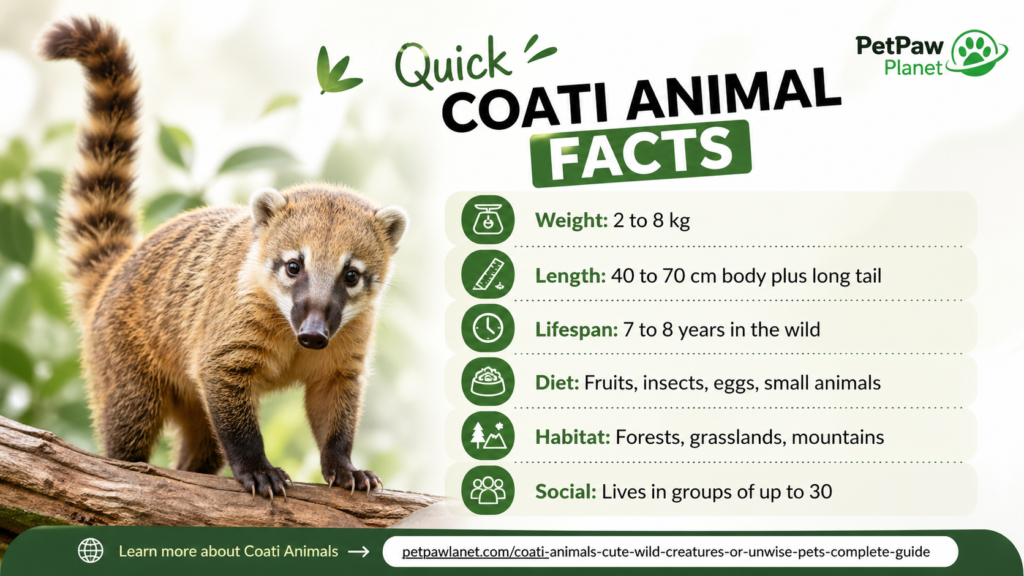
Coati animals are medium sized mammals. They are related to raccoons. They live in forests, grasslands, and mountains. In fact, they are found all the way from Arizona in the USA down to Argentina. They have long snouts. These help them dig for food in the soil. Their tails are long and ringed. They use their tails for balance when climbing trees.While they resemble raccoons, coatis have a distinctive long, flexible snout — perfect for probing under leaves and logs for food. (National Geographic)
🐾 What Is a Coati? Nature’s Curious Forager
Unlike the nocturnal raccoon, coatis are active during the day (diurnal), making them easier to observe and interact with in the wild. Females and young males often live in social groups called bands, whereas mature males live mostly alone. (National Geographic)
What Do Coati Animals Eat?
Their diet is broad and adaptable — in the wild, coatis snack on insects, fruit, small reptiles, and even rodents. (National Geographic). Coati animals are omnivores. This means they eat both plants and animals. For example, they eat fruits, insects, lizards, and eggs. They also eat small rodents. Furthermore, they use their strong claws to dig up grubs from the ground. As a result, they can survive in many different habitats.
📹 Why Coatis Go Viral: The Allure of Cute Behavior
Coati animals are very social. Coati animals live in groups called bands. A band can have up to 30 females and young ones. However, adult males usually live alone. They are active during the day. In particular, they spend a lot of time searching for food. Furthermore, they are very curious animals. They are also very intelligent.
In one popularly shared clip, a coati gets up close and personal with a camera, exploring and sniffing around as if attempting to interact with the lens — behavior many viewers misinterpret as “pet-like.” However, this video features coatis that were habituated to humans after being kept as pets — a situation that animal experts caution against. (Storyful Video)
Even though such videos are charming, they don’t necessarily reflect a coati’s best life in the wild. Watching coatis in their natural habitat — foraging, climbing, and socializing — is fascinating and educational, but it’s very different from coatis living in a human home.
🏡 Can Coatis Be Pets? The Harsh Reality
One of the most common questions people ask when watching coati videos is: “Can I keep a coati as a pet?” The honest answer: It’s generally not recommended — and often illegal. (The Environmental Literacy Council)
Here’s why:
🧠 1. Wild Nature, Not Domesticated
Coati animals live across a wide range. They prefer tropical forests. However, they also live in dry scrublands and mountains. In fact, they are one of the most adaptable mammals in the Americas. As a result, their population remains stable across most of their range. Even if a coati is raised by humans from a young age, it doesn’t change its inherent wild traits. This means their unpredictable behavior can surface at any time, especially as they reach maturity. (The Environmental Literacy Council).
🔒 2. Legal Restrictions
Whether coatis can be owned as pets depends largely on local law. In many regions — including some U.S. states — owning a coati without special permits is illegal. In states like Texas, possession can lead to fines or confiscation because coatis are classified as exotic wildlife. (The Environmental Literacy Council)
Even where legal, strict housing, care requirements, and licensing rules often apply. Checking with local wildlife authorities early is essential to avoid legal trouble.
🐾 3. Specialized Care Needs
Coatis are intelligent and active animals that require:
- Large, secure enclosures with climbing structures and enrichment — simple cages won’t suffice. (pets.edu.vn)
- A complex, balanced diet that mimics wild foraging foods. (pets.edu.vn)
- Constant mental and physical stimulation to prevent boredom and destructive behaviors. (The Animal Sound)
- Veterinary care from an exotics-experienced vet, which is often expensive and hard to find. (buypetusa.com)
Without these, coatis can exhibit stress behaviors like excessive digging, cage chewing, and unpredictability.
🧬 What Are the Risks of Keeping Coati Animals?
There are several risks to consider. First of all, coati animals have sharp claws and teeth. They can cause serious injury if they feel threatened. Additionally, they carry parasites and diseases. Furthermore, they are extremely active. As a result, they can destroy furniture and household items very quickly. Most owners find them very difficult to manage after the first year. (The Environmental Literacy Council)
Even people trying to interact playfully with a wild coati can end up hurt if they misread the animal’s body language or make sudden movements. (The Environmental Literacy Council)
🐾 Coatis and Kids: A Dangerous Mix
Because of their unpredictable nature and powerful claws, coatis are not considered suitable pets for families with young children. The risk of unintentional harm — from scratches during play to more serious bites — makes coatis unsuitable in household settings where children are present. (pets.edu.vn)
🪵 Better Alternatives to Wild Pets
If you love watching coati videos and are drawn to their playful antics, consider these safe alternatives:
- Visit wildlife sanctuaries or rehabilitation centers where coatis live in appropriate habitats.
- Support conservation organizations that protect coati populations and their ecosystems.
- Adopt domesticated animals like dogs or cats that thrive with humans and have established care information.
Appreciating coatis from a distance — whether via video or in natural reserves — ensures both your safety and the animal’s well-being.
🧠 Final Thoughts: Enjoy Them, Don’t Domesticate Them
Coati animals are best admired in the wild rather than kept as pets. They are smart, social, and full of personality. However, they belong in nature. In conclusion, enjoy them on wildlife documentaries and nature walks. Whatever you do, do not bring one home.
Instead of trying to bring a coati home, enjoy their antics online or watch them safely in nature. Respecting their wild nature helps protect the species and keeps both you and the coati safe.


[…] causes further ecological damage across the continent. For more on invasive animals, check out our coati guide. Additionally, amphibian numbers are also heavily affected, with frogs and newts regularly […]
[…] alternative to traditional pets. If you are also interested in other unusual pets, check out our coati animals guide for more inspiration. In this complete guide, we cover the top 6 exotic scorpion species that make […]