
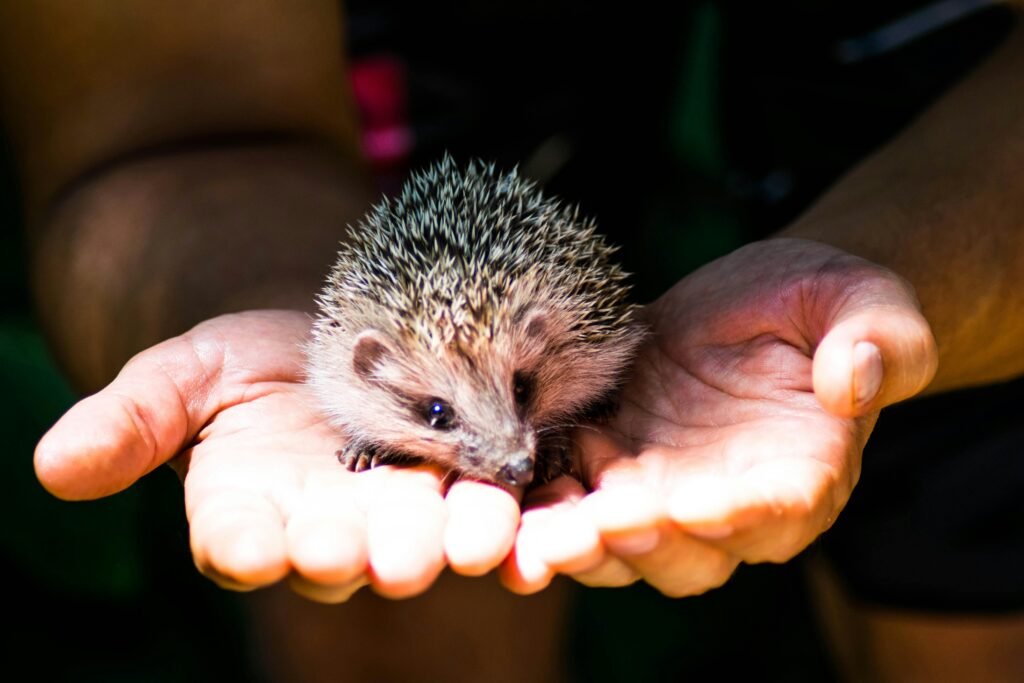
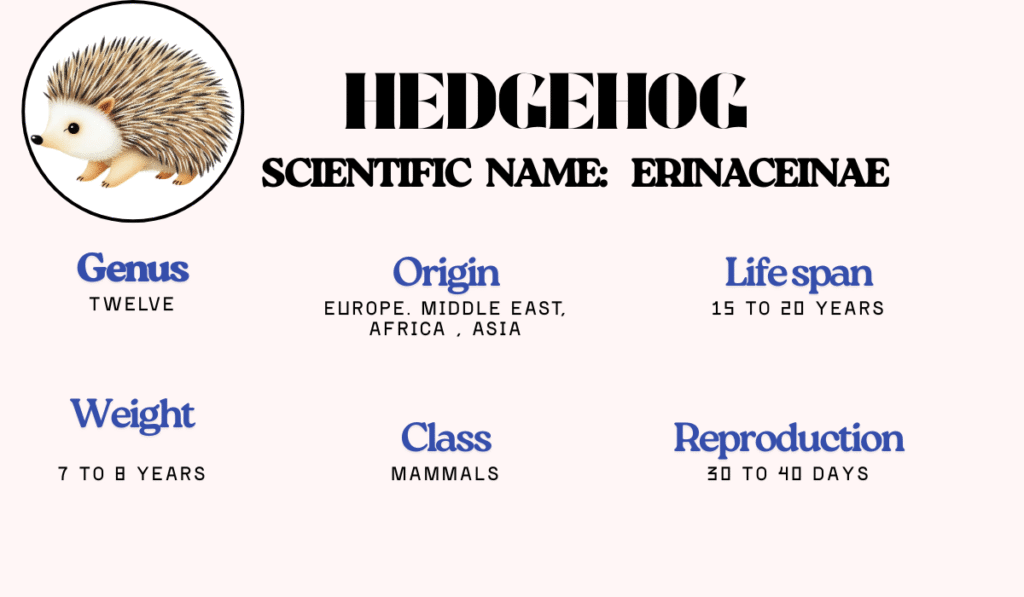
A hedgehog is a small mammal that differs from other animals, as they have spines or quills on their skin. In contrast, hedgehogs have hard spikes on their bodies. Made of the same stuff as our nails are. Hedgehogs are classified based on the shape and pattern of their spikes, skull, and ear length morphology. A Hedgehog can be brown, black, or a variety of different shades. There are 17 recognized species of hedgehogs grouped into 5 genera. The 12 species of hedgehogs are widespread across these 5 genera (Europe, Africa, and Asia). African pygmy, four-toed, European, and Indian long-eared hedgehogs are commonly kept as pets.
All Hedgehog Species
- Atlerix Genus (African Hedgehogs)
- Four-toed hedgehog
- Somalian Hedgehog
- North African Hedgehog
- Southern African Hedgehog
2. Erinaceus (European & Asian Hedgehogs)
- European Hedghog
- Southern White Breasted Hedgehog
- Amur Hedgehog
- Northern White Breasted Hedhehog
3. Paraechinus Genus (Desert Hedgehogs)
- Bare bellied hedgehog
- Brandt’s Hedgehog
- Indian Long-Eared Hedgehog
- Desert Hedghehog
4. Mesechinus Genus
- Small Toothed Hedgehog
- Daurian Hedgehog
- Hugh’s Hedgehog
- Gaoligong Forest Hedghehog
5. Hemiechinus Genus
- Long-eared Hedgehog
- Hefhehog Species Kept as a pet
| SPECIES | Origin | Behavior |
| African Pygmy | Africa | Adaptable to captive |
| Four-Toed Hedgehog | Central and East Africa | Active, Nocturnal |
| European Hedgehog | Europe | Not commonly bred for pets |
| Indian Long-Eared Hedgehog | India & Pakistan | Occasionally Kept |
The most common and human-friendly species of hedgehog is the African Pygmy, whereas the importation of other pet species is strictly controlled. The African Pygmy is generally found on the elevations of the Kilimanjaro mountains at about 1800 meters. The color varieties of this species are all white quilted “snowflake” and colored quill “salt and pepper.
Behavior.
This creature has relatively small eyes as compared to other mammals; therefore, they relies on the internal organs for communication. Hedgehogs have a very developed sense of smell, which helps them to find food and approach other members of their species. The common phenomenon of anting or anointing among all species, in which hedgehogs come across food or plants. It starts by licking or chewing it in a result, it makes them able to produce a lot of foamy saliva. Hedgehogs then use their tongue to spread their saliva and foam onto spines, especially on their sides and back. This doesn’t need direct contact; even smells like cat food, leather, cigarettes, glue, perfume, anesthetic gases, or plants can trigger it.
The valid reason for hedgehogs’ anointing is still unknown, but scientists present the theories after observing their behavior. The possible outcomes may be:
- Protecting against parasites
- Marking territory with scent
- Helping with communication or mating
- Making themselves less appealing to predators
The African Pygmy hedgehog is nocturnal in nature and emerges from its nest and spends its whole day on matted grass, leaf litter, in a rock crevice, or in a hole in the ground. In the rainy season, hedgehogs are active in nature and gain weight. They hibernate in cool, dry weather from June to September. During this period, hedgehogs are not active mentally and physically for up to weeks but emerge in periods of warm weather. During captivity, it is hard for them to go into hibernation. However, they don’t exist in warm places or deserts.
Health and Life Span
As compared to the other hedgehogs, the African pygmy hedgehogs can live on a variety of foods in captivity. Other breeds are caloric and need nutrition based on growth, gender, and activity level. During captivity, hedgehogs gain weight if they don’t get the proper calcium-to-phosphorus ratio of feed. In the wild, they maintain their weight by eating a variety of insects and vegetables. If hedgehogs consume a small amount of mixed fruits, vegetables, and live insects (especially with chitinous exoskeletons I.e, earwig, beetle, snail, spider, etc). Avoid giving milk, which causes diarrhea, and also nuts or grains may affect the gingival tissues or oral cavity. Hedgehogs can learn to drink water from a sipper bottle, but are still offered in an open dish. The bowl and dishes for food should be shallow and heavy or attached to the enclosure and cleaned regularly.
Generally, 500g of food and an adult hedgehog requires a long invertebrates or other protein sources. Competitionally, females need less protein as compared to males hedgehog but pregnant or lactating females need more protein. This pet needs to be weighed on a regular basis to avoid overfeeding and obesity. This may reduce their life span. African pygmy lives 2 to 3 years in the wild due to predators, diseases (dental, mites, and Wobbly Hedgehog Syndrome), and harsh conditions. Whereas, in captivity, it may be prolonged 3 years with proper care, it may extend to 7-8 years.
Conculusions
In captivity, they need proper care as the African pygmy hedgehogs are suspected to foot and mouth diseases. If you want to keep it as a pet, it does not incur a huge cost like other exotic pets. They are nocturnal in nature and sometimes become active during the day and in rainy weather. which is suitable for those people who are punctual with their habits and daily life routines. During the hibernation period, its heartbeat slows, and it accumulates fat under the skin. This exotic pet is very rare in other species, as China and some other countries consume it as food. Some habitats are lost because of deforestation and the expansion of farmlands, and the quick growth of cities.
A few of the hedgehog species have a stable population and are not at a greater risk. But still, these exotic pets need our help to protect them. For this purpose, do more research on such a cute small mammal. By supporting this, you can be a good ally of Petpawlante in saving and protecting the wildlife, which are at a greater risk.
Estimated reading time: 2 minutes

Excellent Research