
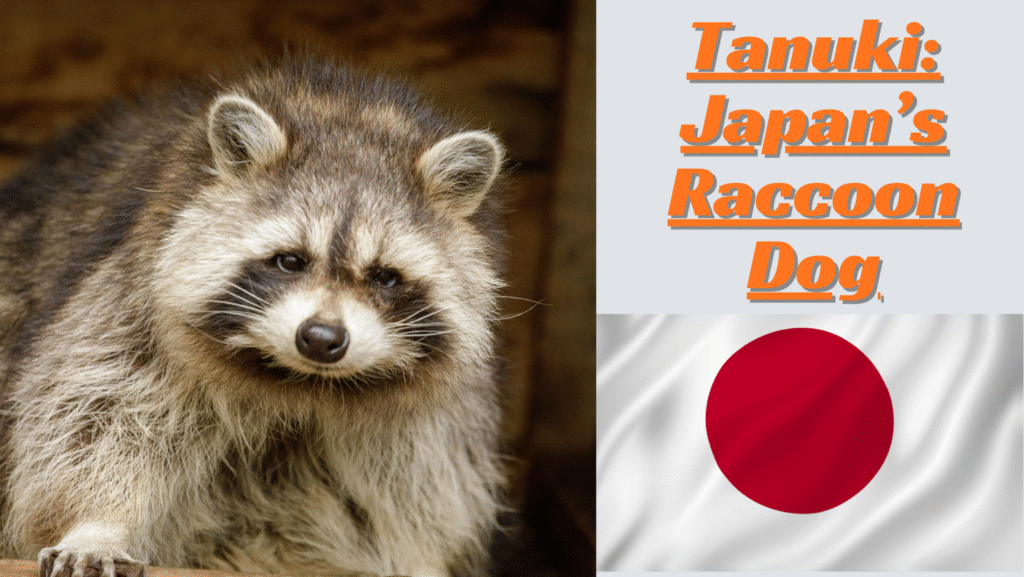
They look like raccoons wearing a dog suit, hibernate like bears, and star in Japanese folklore as magical pranksters with comically oversized testicles. Meet the tanuki (Nyctereutes procyonoides) – the raccoon dog – East Asia’s most charming and problematic canine.
Despite their masked faces and ringed tails, tanuki are 100% canids, not procyonids. Native to Japan, Korea, China, and far-eastern Russia, these fluffy omnivores have accidentally conquered half of Europe and earned a spot on the list of the world’s 100 worst invasive species.
The Only Dog That Truly Hibernates
Tanuki are the only members of the dog family that go into full hibernation. In northern Japan and Siberia, they fatten up in autumn, then sleep in underground burrows from November to March. Their body temperature can drop below 10 °C, and their heart rate slows to just 10 beats per minute. When they wake up in spring, they’ve lost almost half their body weight but are ready to breed immediately.
In warmer southern Japan, they stay active year-round – a flexibility that makes them unstoppable invaders.
Diet of a Super-Omnivore
Tanuki will eat anything: berries, roots, insects, fish, frogs, bird eggs, small mammals, carrion, and even poisonous toads (they neutralise the toxins with special saliva enzymes). This “eat everything” strategy lets them thrive in forests, wetlands, farmland, and city suburbs alike.
Cultural Superstar: From Yokai to Mario
In Japanese folklore, tanuki are mischievous shapeshifters famous for drumming on their bellies and turning leaves into money. The renowned ceramic statues outside shops and restaurants exaggerate one particular body part (their scrotum) as a symbol of luck and wealth. Yes, really.
You’ve probably met one without knowing: the Tanooki Suit in Super Mario Bros. 3 is based on the tanuki’s mythical ability to fly by using its “bag” as a parachute.
From Fur Farms to Continental Takeover
The dark chapter began in the 1920s when the Soviet Union imported thousands of tanuki for fur farming. Many escaped or were released. With no natural predators in Europe and mild winters, populations exploded.
Today, over 200,000 raccoon dogs are culled annually in Europe, yet the front line keeps moving west. They’ve reached France, Germany, Poland, Finland, Sweden, and even Spain. They devastate ground-nesting birds, amphibians, and native crayfish, and can carry rabies, ticks, and parasites.
Meanwhile, in Japan itself, the native tanuki population is stable and culturally adored. Still, the country now battles a different masked invader: actual North American raccoons released after the 1970s anime Rascal the Raccoon sparked a pet craze.
Quick Tanuki Facts
- Weight: 3–10 kg (doubles before hibernation)
- Lifespan: 3–7 years in the wild, up to 15 in captivity
- Litter size: 6–8 pups, sometimes two litters a year in mild climates
- Top speed: 40 km/h
- Superpower: can climb trees almost as well as a raccoon
Where to See Them
- Japan: dusk walks in rural areas or Tokyo suburbs (they love cat food left outside)
- Europe: wetlands and forests in Poland, Finland, Germany – but please don’t feed them!
Final thought: the same traits that make tanuki adorable folklore heroes – intelligence, adaptability and cuteness overload – are exactly why they’re an ecological disaster once taken out of their homeland.
Love them in statues and video games. Just don’t bring one home.