
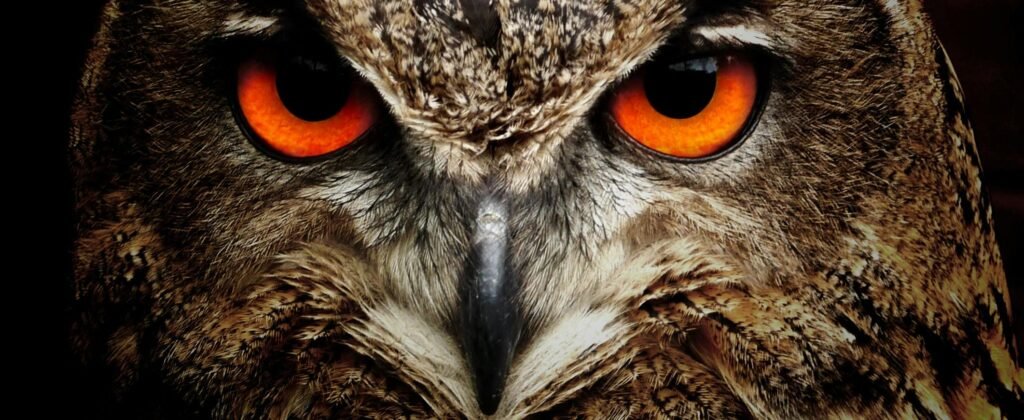
Owls have always fascinated people with their eerie calls, quiet flight, and secretive nighttime habits. These birds of prey have many interesting traits that set them apart. In this article, we’ll look at some of the most interesting things about owls by answering common questions about their unique behaviors and adaptations.
What Do Owls Eat?
Owls eat mostly small animals like mice, rats, voles, and insects. Their sharp talons exert immense pressure, which helps them capture and subdue their prey swiftly. (15 Incredible Owl Traits That Make Them Top Predator, n.d.) Additionally, owls utilize their acute hearing and night vision to locate and hunt these animals, even in complete darkness. The structure of their facial discs channels sound to their ears, enhancing their ability to detect prey. (Sound localization in owls, 2025) Bigger owls, like the Great Horned Owl, might also hunt rabbits, squirrels, or other birds. After eating, owls often spit out pellets made of bones and fur they can’t digest.
Why Do Owls Hoot?
Owls hoot to communicate with each other. Most often, they hoot to claim their territory and keep other owls away. Hooting also helps them find mates during breeding season. Each species has its own call, and even individual owls can sound a bit different. For example, a male owl might hoot more to attract a mate or warn other males.
Which Owl Is Best for Growing a Garden?
Owls can really help gardeners by keeping pests under control. Barn Owls are especially good at catching rodents like mice, voles, and rats, which often harm plants and crops. (An unlikely symbol of cooperation, the barn owl brings Arab and Israeli scientists together, 2025) If you want to attract Barn Owls to your garden, you can put up owl boxes or make your yard more inviting for them. This way, you get natural pest control without using chemicals.
What Do Owls Do When They Are Happy?
Owls might seem serious, but they do show signs of happiness. A happy owl might puff up its feathers or make gentle sounds. Some owls even play by chasing each other or hopping around. Owls that are used to people may flap their wings or look more relaxed when they’re content.
When Do Owls Sleep?
Owls sleep during the day and are active at night. They hunt best in the dark because of their sharp eyesight and hearing. Unlike humans, who have more cone cells for daylight vision, owls have eyes packed with rod cells that enhance their night vision. (Cone | Color Vision, Photoreception, Rod Cells, n.d.) This adaptation allows them to see even in extremely dim light.
Which Owl Is Lucky for Your Home?
Many cultures see owls as symbols of wisdom, protection, and good luck. The Eastern Screech Owl and Barn Owl are often thought to bring positive energy to a home. Besides helping with pests, people admire their mysterious nature and spiritual meaning. Some believe owls can keep away bad luck and bring good fortune. Still, it’s essential to respect owls as wild animals and only attract them in ways that are safe for them.
Why Do Owls Sleep in the Day and Not at Night?
Owls are active at night and sleep during the day because they are nocturnal hunters. Their big eyes help them see in the dark, and their sharp hearing allows them to find prey. During the day, bright sunlight makes it harder for them to see, so they rest in hidden places. Being awake at night also helps them avoid competing with animals that hunt during the day.
What is the life span of owls?
The lifespan of owls can vary widely depending on species and environmental factors. In the wild, they generally live between 5 and 10 years, though some may live longer. For example, the Barn Owl typically has a lifespan of 4 to 5 years, while larger species like the Great Horned Owl can live up to 13 years or more. (Bubo virginianus (great horned owl) | INFORMATION | Animal Diversity Web, n.d.) The difference in lifespan is mainly due to several mortality factors. Owls face numerous challenges, such as car collisions, rodenticides, and habitat loss, which significantly impact their survival. (Concerns grow over owls eating rodents full of deadly household rat poison, 2021) In captivity, where they are shielded from these threats and have consistent access to food, owls often live much longer. It’s not uncommon for them to reach 20 years or more, given the safer surroundings. (What is the average lifespan of an owl?, n.d.)
Do Owls Have Good Hearing?
Owls have excellent hearing, which helps them hunt. Their ears are set at different heights on their heads, allowing them to pinpoint precisely where a sound is coming from, even in the dark. (Sound localization in owls, n.d.) This lets them hear tiny noises, like a mouse moving in the grass, making them great night hunters.
What Does It Mean if an Owl Hangs Around Your House?
If you often see an owl near your house, it could mean there are plenty of rodents nearby for it to eat. Owls are also seen as symbols of wisdom and mystery in many cultures. Some people think an owl brings protection, guidance, or even good luck. Still, remember that owls are wild animals, so it’s best to admire them from a distance and not treat them like pets.
Conclusion
Owls are amazing animals, and learning about them shows just how well they fit into their environment. Their hunting skills and sleeping habits are just a few of the things that make them special. Whether you like their symbolism or their natural talents, it’s clear that owls are truly fascinating creatures. So, why not take a moment tonight to step outside and listen for the call of a nearby owl? By doing so, you might transform your curiosity into a personal connection with the mysterious world of these remarkable birds.
Citations
Are Hawks Afraid of Owls? Predatory Behavior and Owls’ Impact https://chipperbirds.com/hawks-vs-owls-fear/
Do Owls Eat Deer? An In-Depth Look At The Hunting And Feeding Habits Of Owls – Berry Patch Farms https://www.berrypatchfarms.net/do-owls-eat-deer/
Josie Necklace – Melia Nae https://melianae.com/products/evil-eye-necklace
Mid Wales My Way: Dark Skies | Powys | https://www.midwalesmyway.com/darkskies
Brown, M. E. (2013). MULTIDISCIPLINARY APPROACH TO UNDERSTANDING THE POOR REPRODUCTION IN THE WHOOPING CRANE (GRUS AMERICANA). https://core.ac.uk/download/56110681.pdf